Every October, as pumpkins appear on porches and Halloween decorations emerge from storage, another seasonal ritual begins.
The candy corn returns.
And with it comes the question that has divided families, coworkers, friendships, and possibly entire neighborhoods:
Do you actually like candy corn?
There are those who eagerly reach for the little yellow, orange, and white kernels of sugary nostalgia.
And then there are those who look at candy corn with the deep suspicion normally reserved for suspicious leftovers.
Personally, we need to settle this once and for all.
Candy corn lovers are right.
Everyone else is simply mistaken.
A Candy With Surprisingly Deep Roots
Candy corn has been around for a long time.
The candy is generally traced back to the late 1800s, when confectioners began producing molded candies inspired by agricultural themes. At the time, candy shaped like fruits, vegetables, and other farm-related objects was a popular novelty.
The Goelitz Confectionery Company, which later became Jelly Belly, is widely credited with producing candy corn beginning in the 1880s.
Yes, candy corn predates the automobile, commercial radio, sliced bread, and television.
And somehow we’re still arguing about it.
Originally, candy corn was associated with the harvest rather than exclusively with Halloween. Its corn-kernel shape fit perfectly into the agricultural imagery of the era, when confectioners were apparently looking at farm crops and thinking, You know what would be delicious? If we made that out of sugar.
A bold choice.
History has vindicated them.
Why Does Candy Corn Have Three Colors?
That distinctive white, orange, and yellow design wasn’t created merely to make the candy look festive.
It was designed to resemble an actual kernel of corn.
The pointed white end represents the lighter portion of the kernel, the orange center provides the middle, and the yellow base gives it the appearance of a whole kernel.
Today, candy corn is strongly associated with Halloween, but its harvest imagery is part of the reason the association developed in the first place.
In other words, candy corn didn’t randomly show up at Halloween.
It had a whole agricultural backstory.
Then Came Halloween
Over time, candy corn became increasingly connected with Halloween and autumn celebrations.
And honestly, it was practically destined for the job.
It’s inexpensive. It’s colorful. It doesn’t require refrigeration. It can sit in a candy bowl for approximately the entire month of October while everyone walks past it debating whether they’re going to eat it.
Eventually, it became one of those unmistakable signs that Halloween had arrived.
Pumpkins? Halloween.
Skeletons? Halloween.
Candy corn? Definitely Halloween.
The Great Candy Corn Divide
And then we arrive at the controversy.
Candy corn seems to inspire unusually strong opinions.
There is no comfortable middle ground.
Nobody says, “Candy corn is fine. I suppose I’ll have three.”
No.
People either eat it by the handful or look personally offended when they discover it in the Halloween candy bowl.
Critics complain that candy corn is too sweet, too waxy, too soft, or has an unusual texture.
To which candy-corn enthusiasts would like to respond:
It’s candy.
It is literally supposed to be sweet.
That’s the assignment.
And the texture?
That’s part of the experience.
Why Do People Love It?
For many fans, candy corn isn’t just candy.
It’s nostalgia.
It’s Halloween in edible form.
It’s the candy bowl sitting on the counter. It’s costumes, plastic pumpkins, October decorations, spooky movies, and childhood Halloweens.
There’s also something satisfying about the way candy corn is designed to be eaten. You can nibble it one piece at a time, eat the layers separately, or completely ignore the intended method and shove a small pile into your mouth like you’ve just discovered an unattended treasure chest.
There are no rules.
Well, except that the candy corn haters are wrong.
And What About the People Who Hate It?
We respect everyone’s right to have an opinion.
Even incorrect ones.
Some people genuinely don’t enjoy the texture or flavor, and that’s perfectly reasonable. Taste is subjective.
But when someone announces, “I HATE CANDY CORN,” with the intensity of someone exposing a major conspiracy, we have questions.
Who hurt you?
Was it the candy corn?
Was it Halloween 1997?
Did someone force you to eat an entire decorative pumpkin full of it?
We may never know.
Candy Corn Has Survived Everything
Think about what candy corn has witnessed.
It was around before airplanes became commonplace.
It survived two World Wars.
It survived the Great Depression.
It survived disco.
It survived the 1980s.
It survived the invention of the internet.
It survived the rise of avocado toast.
And despite decades of people announcing that candy corn is terrible, it keeps coming back every October.
That’s not failure.
That’s staying power.
The Verdict
Candy corn may not be everyone’s favorite Halloween candy.
And that’s okay.
Halloween has room for chocolate bars, peanut butter cups, gummy creatures, sour candy, caramel, taffy, and all manner of sugary chaos.
But candy corn deserves its place at the Halloween table.
It is old-fashioned, unmistakable, nostalgic, and wonderfully weird.
So this October, when the candy corn appears in stores, don’t judge it too quickly.
Pick up a bag.
Pour some into a bowl.
Enjoy a little piece of Halloween history.
And if you don’t like it?
That’s fine.
We’ll be over here eating yours.
Candy corn lovers, unite.
The rest of you can have the raisins from the Halloween variety pack.
We’re not monsters.
We’re just right.
-Head Guide-Errant Corner HQ
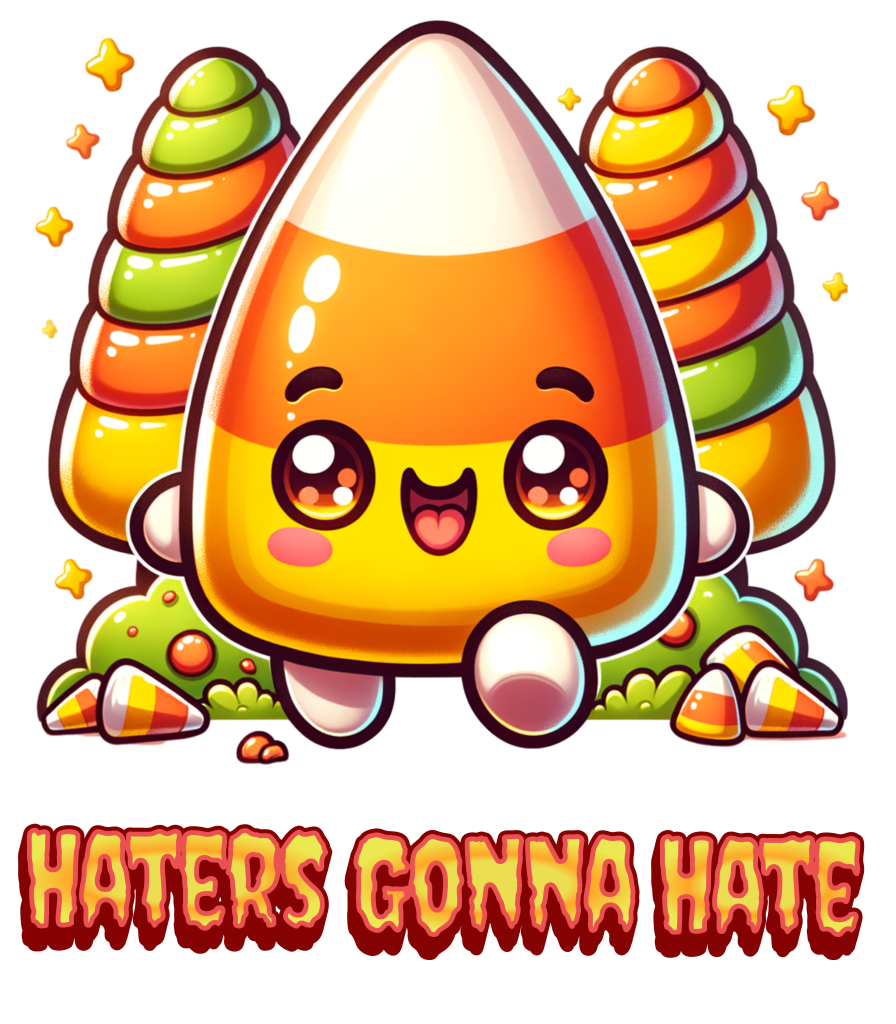
PS If you want to get a shirt to show your love of the best Halloween candy visit my shop. https://cristysteecorner.com/products/haters-gonna-hate-candy-corn


Leave a Reply